Sunday, February 28, 2010

The Olympic Spirit


Like many Americans and people around the world, I've spent the better part of two weeks following the Winter Olympics. As I sit here anxiously awaiting the start of the gold medal hockey game, I truly feel the Olympic spirit. Even thought the Olympics has been thoroughly commercialized and includes, in the case of hockey and other sports, well-paid professional athletes, I would argue that there still is something very special about the Olympic games. As someone who believes in the power of sports, I would argue that the Olympics are an important political event, too, because they promote political understanding through athletic competition.
Political importance aside, you are probably wondering what, if anything, the Olympics can teach us about life in middle school? I think that answer lies in what the Olympics teaches us about courage, commitment, and determination.

I always feel more of a personal connection to Olympic athletes, many who toil for years and years with minimal recognition and even less financial support. They put in countless hours in pursuit of their dreams. They seem so much more like...everyone else. One of my early winter Olympic memories is the heart-wrenching saga of speedskater Dan Jansen. His sister died just hours before he took the ice in Calgary (1988) and he proceeded to fall, ruining his gold medal hopes. Not willing to give up on his dreams, Jansen trained for another opportunity 4 years later in Albertville, France...only to lose again and finish out of medal contention (4th place). But, Jansen simply would not give up. Knowing that the Olympics would be in 2 years instead of the customary 4 years (after 1992, the International Olympic Committee decided to alternate the winter and summer games), Jansen decided to stick it out and make one more run at a gold medal. When he took the ice in Lillehammer, Norway, he lost again in the race that he was favored to win (500 meters), leaving him one final race in his Olympic career...and an minimal chance of winning an Olympic medal. If you know about Jansen's career (of you've seen the Visa commercial throughout this Olympics), you know what happened next. He won the gold medal, and took a victory lap around the rink with his daughter, named Jane after his sister who passed away in 1988.
Therein lie the ultimate Olympic lessons that we can share with our middle school students:
1. Try your best even if no one is watching.
2. Do things for the right reasons, not just money and fame.
3. Win and lose with grace.
4. Never forget who you are and who you represent.
And most importantly,
5. Never give up on your dreams.

Thanks again for reading. As always, I welcome your comments. Enjoy the final two weeks before Spring Break,
Mike

Saturday, February 13, 2010

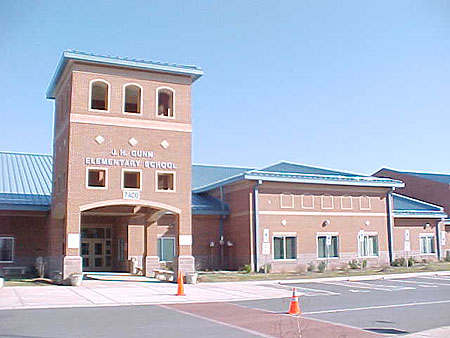
Fun at JH Gunn

One of the most exciting elements of middle school here at PDS is our partnership with JH Gunn Elementary School. Under the leadership & vision of Cindy Osborne, and a committed group of parent leaders, faculty, and students, PDS is getting a true taste of service learning. It is important to note the differences between service learning and community service, and how that impacts our students and faculty in such a positive way. Community service is a great benefit, too, but the goals and impact of service learning are different. According to the Center for Leadership & Service at the University of Florida, one of the key tenets of service learning is "the incorporation of the concept of mutuality, meaning that several parties are involved in the planning of the program...including students, faculty, and those being served." Another key part of service learning, is that the experience itself "fosters participant learning about the larger social issues that are driving the need for service..." The PDS-JH Gunn partnership is defined by these important tenets, and students & faculty at both schools benefit from working together.
My first experience visiting JH Gunn took place on Wednesday. Along with 38 students, 3 faculty members, and 10 parents, we spent time reading, writing, and eating lunch with 2nd graders. It is an understatement to say that I was impressed with the faculty and students at JH Gunn. From the minute we entered the building, you could tell that JH Gunn was a place where the great things happen. From inspiring quotes, to friendly staff, to prominently displayed student work, it was obvious that everyone at JH Gunn is committed to helping each and every student reach their educational potential.
Along with a group of 8th grade boys, Mr. Harper & I had the special opportunity to work with Mr. K's second grade class. What makes his class extra special is that it was ALL boys...yes, a group of 15 7 and 8 year-old boys!! Mr. K's class was well-behaved and lots of fun. For 30 minutes in the classroom, it was amazing to see our PDS students transform into big brothers, role models, and teachers...and to see a room filled with smiling 2nd graders. The good times continued over lunch, and we enjoyed hearing about life from the perspective of a 7 year-old. It is often said that "time flies when you are having fun," and that was clearly the case with our time spent at JH Gunn.
After getting on the bus, the 38 students spent a few minutes answering reflection questions. Reading these reflections only reinforced my belief that that the PDS-JH Gunn partnership is special. Our students talked about making people smile, enjoying the opportunity to read, write, and teach, and, most of all, hanging out with a fun group of students. In thinking about the success of this partnership, I think that we'd be hard-pressed to find a better way of teaching our middle school students so many important life lessons and "real world" skills. In the years ahead, there is no guarantee that our middle schoolers will remember what they learned in 6th, 7th, and 8th grade, but they will definitely remember their experiences working with JH Gunn Elementary School.
As always, I welcome your comments. Thanks again for reading,
Mike

Saturday, January 23, 2010

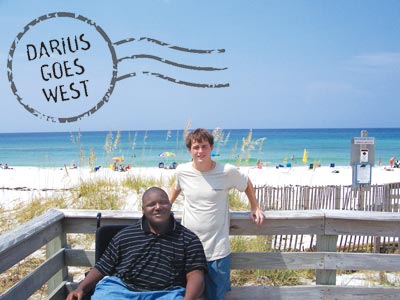
Darius Goes West


What a great week to start to the 2nd semester!! There was just enough sunshine to make me optimistic that Winter will be short and Spring will be here before we know it. I decided to write about the special opportunity I've had to visit with Ms. Parker and Mrs. Edelman's advisee over the course of the past few weeks as they've watched Darius Goes West, a critically-acclaimed documentary about a 15 year-old with a fatal disease (Duchenne Muscular Dystrophy).


I'll write about the documentary in a little bit, but I wanted to use this week's Blog as an opportunity to talk about some of the great things that happen in advisee. Advisers serve a very special role in our middle school. They are motivators, providers of information, mediators, role models, and friends. They celebrate birthdays, lead community service activities, and provide students with a forum to discuss important issues. In many cases, advisors foster relationships with each advisee that continue for many years. I think that the advisee program in our middle school (and at Providence Day in general) is a point of pride, and is one of the things that makes us special.
Watching Darius Goes West with two groups of 6th grade boys is a prime example of what makes the advisee program special. Providence Day is a school grounded in academic excellence across each division, and it should be a point of pride. At the same time, we should never underestimate the value of what happens outside of the classroom. As a parent, I want my children to be challenged academically and reach their academic potential, but, more importantly, I want them to be good people. Activities like watching Darius Goes West help our students develop empathy and understanding. These are the types of activities that happen on a daily basis in advisee. Groups not only watch videos that lead to enlightening discussions, but they complete service learning activities, they talk about the physical and emotional changes that they are experiencing, they solve problems together and help each other through a challenging day, and the list goes on and on. They also have lots of fun. I watched two groups meeting together one day this week having a crazy sock party (as a part of Spirit Week). The smiles and laughter was wonderful, and I left thinking that it would be hard for those young ladies to leave advisee and not enjoy the rest of the day.
In conclusion, I managed to say far too little about Darius Goes West, and for that I apologize. It is a wonderful documentary that will make you laugh and cry, and I would strongly encourage you to watch it if you haven't seen it already. You can visit the official website at www.dariusgoeswest.org to watch the entire movie, and learn more about the making of the film, about Darius' personal journey, and about Duchenne Muscular Dystrophy.
As always, I welcome your comments. Thanks for reading,
Mike

Saturday, January 9, 2010

Looking Back...a semester in review.


Welcome Back!! I hope that everyone had a wonderful holiday break. My holiday break included LOTS of driving, WAY too much eating, quality time spend with family in Pennsylvania and New Bern, repeated viewings of Dora the Explorer and Curious George, and, most importantly, lots of time just hanging out with my wife Samantha, and children (Zachary-11, Michael-5, and Rylee-2). This picture is my favorite of the 200+ we took over the holidays. Samantha captured the quintessential holiday moment-the excitement of one our children opening a gift that they really wanted. In this case, Michael was elated that Santa had brought him the Nintendo DS game on his Christmas list.

I decided to include this picture because it reminded me of the scene on this past Monday morning where the 6th grade students have their lockers. Coming from Upper School, I was accustomed to the morning following the holiday break to be a fairly low-key affair. Many of the students turn nocturnal over holiday break, staying up late to play video games and watch TV and not waking up until well into the afternoon. Consequently, the alarm on Monday morning hits them like a ton of bricks and hours before lunch are spent in a semi-sleepy state.

The scene amongst the 6th graders was exhilarating. Students were excited to see each, they were excited to see their teachers, and they were excited to be back at school. In short, it was a microcosm of what makes middle school at PDS a special place. Our faculty has the special ability to channel all of that excitement to the classroom, and the result is extraordinary.

In spending (almost) a semester with middle schoolers, I've been amazed at what middle schoolers are capable of doing. Here are a few of my observations:

-I've seen them engage in high level discussions about hot button political issues.
-I've seen them give countless hours to JH Gunn Elementary, and, in the process, forge lasting relationships with their students and staff (not to mention the tangible contributions: bulletin boards, non-perishable foods, books, holiday gifts, etc.)
-I've seen the personal connection that they have to our teachers, and how the adults in our community serve as role models.
-They have a comfort level with technology that I will never have.
-Many of them LOVE reading, (maybe not always what's required for school:)) and books still are cool.
-They dream big, and possess much more optimism than most adults.
-Birthdays are still important, and they go to great lengths to honor each other (and their teachers)...and that people with a birthday over the summer will sometimes celebrate a 1/2 birthday instead.
-They eat large quantities of the foods that I can only eat in moderation (french fries, pizza, desserts, chips, etc.)
-They are genuinely disappointed when their hero does something bad (Tiger Woods was a name that came up numerous times after Thanksgiving).
-The list, quite frankly, could go on for pages. I'd love to hear your observations about our middle school students here at PDS. Thanks again for reading,
Mike

Friday, December 18, 2009

Happy Holidays

I'm sitting here at my desk as the students are finishing up their final exams. The snowflakes are falling, there is a chill in the air, and you can almost feel the excitement amongst the faculty & students. The front desk and mailroom (and probably other places all over campus, too) look like a candy store or bakery, and I've had more than my fair share of all of the tasty treats. Days like today make you appreciate just how wonderful our community is, and how special it is to be a part of a K-12 campus. My hope is that everyone in our Providence Day community has a restful holiday break and a very happy new year. Thank you to everyone who has helped make my first few months in middle school such a wonderful experience.

Sunday, December 6, 2009

Inspiration Found

I had every intention of writing a column this week about some of the things that I believe need to be improved in our middle school. Specifically, I planned on writing about some of daily challenges in the dining hall like trays & trash being left on tables and countless utensils being throw in the garbage. I'm a strong believer that there is always room for improvement even in a school as good as PDS, so I'll return to this discussion another time. The reason that I decided to switch topics at the last minute was what happened on Saturday. I had the good fortune of watching 3 of our middle school basketball teams complete in the Golden Corral Middle School Holiday Tournament (I didn't get to see the 7th grade girls). I was immediately inspired by the level of play in each of the games. I was impressed with how the teams played together, how the coaches brought out the best in their players, and how all involved represented our school with integrity.

I'll be the first to admit that I'm biased. Because sports have played such an important role in my life, I'm convinced that athletics are a powerful way for young people to develop character and a strong work ethic. I think that watching 5 boys or girls working together on the court and 10 boys or girls cheering from the bench is a beautiful thing. I think that seeing a team with only 6 players persevere through fatigue is inspiring. I think that watching players dive for loose balls or sink crucial free throws is evidence of character. I'll be just as inspired tonight watching our winter concert. I look forward to seeing our middle schoolers work together and share their musical talents.

I'm convinced that what I saw on Saturday (and will see tonight), paired with what I was planning on writing about, is really a microcosm of middle school students. Our middle schoolers are young adults who have the maturity to work effectively in the most stressful of circumstances. They can work together, solve problems, and follow directions. On the other hand, they still sometimes struggle with very basic responsibilities like cleaning up after themselves, and returning plates, silverware, and cups to the correct place. They are, as mother always liked to say, "a work in progress."

I'm sure that all of us who know and love the middle school students here at PDS will see them express the gamut of emotions over the next weeks. It is a time filled with stress about exams/tests, and excitement for the holidays and winter break. As always, I'd love to hear what you think. Thanks for reading,
Mike


Saturday, November 14, 2009

Thanksgiving

Thanksgiving has always been my favorite holiday. I love that its uniquely American, and that everyone in the United States (with a few small exceptions) celebrates the holiday. As someone who loves history, I can even look past the fact that the story of the "first Thanksgiving" has very little historical support, and, most likely, didn't happen in the way that its ingrained in our minds.
I have so many Thanksgiving-related memories, that I could bore everyone for hours on end with personal stories about my favorite Thanksgiving celebrations...so I'll spare you the details. The biggest reason that Thanksgiving is my favorite holiday is because it exemplifies the FFF philosophy that I live by...Family, Food, and Football. Until my family situation evolved, I spent Thanksgiving at the same place for 26 of 27 years, my Aunt & Uncle's house in Hatfield, PA (Thanksgiving 2002 was spent in London, but we still enjoyed a turkey & all the fixings). I also spent the morning watching my high school (Pottsgrove) take on the local parochial school, arch-rival St. Pius X. The 40-minute drive to my Aunt & Uncle's house was always filled with anticipation of seeing whether or not we'd be dressing up as Pilgrims or Native Americans. YES, my Aunt created hand-made outfits for all 20+ guests, and, more importantly, individualized names (unfortunately, I cannot remember and/or cannot repeat most of the these names). Upon arrival, the day was spent catching up with family, watching lots of football, and eating way too much food (with Nana's pumpkin pie being a personal favorite).
While I always have fond memories of Thanksgiving & the three F's, I've chosen this topic because I think its important to stop and focus on the things for which I am truly thankful. On a personal level, I'm happy to have a truly wonderful family. My wife and children make every day special, always bring a smile to my face, and help me stay focused on the important things in life. In her daily e-mails, my mother often reminds me that "I'm a lucky man" or "I'm truly blessed" and she couldn't be more correct. I will always give thanks to having a stable & loving family my entire life. Thank you Mom & Dad, Sam, Zachary, Michael, Rylee...and the rest of the family.
On a professional level, I am truly thankful for the opportunity to have a career that doesn't feel like work. I get to spend my days in the company of children who are optimistic about the future, colleagues that are committed to helping young people reach their potential, and a school community that makes me feel like I'm part of a family. PDS is not perfect, but its about as close as you get in a educational environment. And, more importantly, this is a community that is driven to make it better.
Our middle school teachers and families do an excellent job of helping our middle school students develop a sense of thankfulness and community involvement. The relationship with JH Gunn Elementary and the CANstation project are two examples of ways that our students are encouraged to contribute to causes greater than themselves, and, directly and indirectly, develop empathy towards others who face daily challenges that the average PDS does not face.
I hope that all of you have a wonderful Thanksgiving holiday. Thank you for helping make PDS special, and for raising children and students that are destined for greatness in the future.

Sunday, November 8, 2009

What Does the Survey Say??

Its hard to fathom how quickly this year is going by. Can you believe that Thanksgiving vacation begins in a little more than two weeks? Quite honestly, August 19th feels like yesterday to me. The 6th graders move around like grizzled veterans, the 7th graders seem to grow taller every single day, and the 8th graders mature by the minute. I often wondered growing up how my father taught for so many years (this year is his 37th and final), but I realize now just how quickly the years go by when you are teaching. Because things move so quickly, and we have so little time to stop and think about "how things are going" until holiday breaks and summer, I decided to survey some advisee groups. As all of us know, one of the great things about middle school students is that they will tell you how they feel about things. Its refreshing and sometimes humbling (i.e. a student asked me last week "if I forgot to shave today...guess they do notice those things:)...), so I was confident that I'd get some candid answers from the surveys.


The "survey" that I had the advisee groups complete was simple and completely unscientific in nature. I gave the students two boxes, one asking the "thing(s) they like the most about middle school at PDS" and the other asking the "thing(s) they like the least about middle school at PDS." 31 students ended up completing the survey anonymously, and, surprisingly, the answers were very similar.

The two things most often cited in the "like the most" category were the length of lunches, and the caring nature of their teachers. This is not surprising because the 8th graders take great pride in having the annex as their "private" dining area, and they truly make the most of the extra time to socialize, hang out, and play. Since this is my first year in middle school I have nothing as a basis for comparison, but this 8th grade class seems like a tight-knit bunch who enjoy hanging out with each other, and who, for the most part, treat each other with dignity and respect. Its amazing how this changes when they move into upper school where the 9th and 10th grade classes always struggle with identity issues and 11th graders are overloaded with stress. Its not until 12th grade where each class regains its respective identity.


The "caring nature of their teachers" shouldn't surprise anyone who knows and loves PDS. This is a SPECIAL group of teachers who are committed to supporting our middle school students through the emotional roller coaster know as middle school. Because of the "in between" nature of middle school, I'm convinced that middle school teachers never get the amount of credit they deserve for leading young people from lower school to upper school. When I asked a teacher over the summer to describe middle school, they said it was "the bridge between lower school and upper school...but keep in mind that its a SUSPENSION bridge...that isn't very sturdy most of the time:)" I'm happy to hear that our middle school students appreciate the professional staff that supports them.

The two things cited consistently in the "like the least" category are the dress code and the amount of homework each night. I can honestly say that I've learned a lot about the many subtle, yet important, differences in women's dress, and I've spent a significant amount of time discussing the dress code with girls. The biggest "problem" that many girls have with the dress code is that they cannot wear t-shirts or blouses that look like t-shirts. The challenge with any dress code is that the "line" needs to be drawn somewhere, and this is where the line is at PDS. The point I've made to the young ladies who've asked is that "allowing girls to wear t-shirts would create an additional challenge to the boys' dress code, because the boys are required to wear a collared shirt." The girls' dress code has more "freedom" as it stands, and adding t-shirts to the list of approved dress for girls might provide proof to the boys who say "girls can wear whatever they want..."

As for homework, I'm not surprised that it makes the top of most lists. I can't think of anyone who ENJOYS homework, but that doesn't mean that there isn't real value to doing work after the "official" school day ends. Some subjects (i.e. Math, World Language) greatly benefit from nightly practice, and I can't see a positive scenario that doesn't include homework in these areas. The challenge is that many of our middle schoolers have jam-packed schedules where they are literally doing something for 14 hours a day. I wish that there was a way to support the large percentage of our students who are talented in so many ways and committed in so many productive areas. As we all know in all areas of life, its very easy to add something new, but its hard to take something away. There is no better example than our different levels of government. It doesn't matter where you stand on the political spectrum, but we can all agree that government spending is constantly increasing regardless of what political party is in charge.

Thanks again for reading. I'd love to hear what you think about the "best" and "worst" things about middle school at PDS. Feel free to e-mail me or put a note in my mailbox if you don't feel comfortable posting a response. Have a fantastic week,
Mike

Saturday, October 31, 2009

What Motivates Middle School Students?


One of the things that all of us as parents and teachers of 11-15 year-olds ALWAYS think about are ways to successfully motivate young people. We want them to become driven and self-motivated, and we want them to develop positive habits that will provide beneficial in upper school, college, and life. The million dollar question is HOW. I'd love to say that I'm going to provide the answer in this blog, but, unfortunately, there is not a "one size fits all" motivational model.

I've always been one of those people with a great appreciation for motivational speakers, thoughtful quotes, and inspiring stories. So, when I saw the advertisement in the Charlotte Observer for the Get Motivated seminar in Charlotte, I jumped at the opportunity to see Rudy Giuliani, General Colin Powell, Terry Bradshaw, and former First Lady Laura Bush speak (and it was a pretty darn good deal for $4.95!). All of the speakers in the day-long seminar were fantastic, but I was especially moved by the leader and co-creator of seminar, Tamara Lowe. Ms. Lowe spoke about the concept of Motivational D.N.A. In her mind, every person's motivation is based upon their Drives (internal forces that mobilize a person to act), Needs (core requirements that a person must have in order to feel fulfilled), and Awards (preferred compensation that a person desires for achievement). Within these categories, there are two main types of people.
Here are the examples for each D.N.A. segment:
*Drives: Most people are either Producers (competitive, task-driven and assertive) or Connectors (cooperative and people-oriented). Here's the motivation piece: Producers are motivated by results and Connectors are motivated by relationships.

*Needs: Most people are motivated by either Stability (like structure, facts and routine) or Variety (value change, new experiences, and freedom of expression). Stabilizers are motivated by facts and those who fall under the Variety label value fun.

*Awards: Most people are motivated by Internal (outcome, sense of accomplishment, private recognition) or External (tangible benefits, public acknowledgement, opportunity for advancement) factors. Those motivated internally are motivated by contribution and those motivated externally are motivated by opportunity.

There is a point to sharing the Motivational D.N.A. framework. Tamara Lowe pointed out her own challenges with motivating her two children. One of her children was "easily motivated" and the other was "impossible to motivate." She realized that her system of motivation (praise, tangible awards, etc.) didn't work with her son who was "wired" differently. When she & her husband changed their motivational tactics to fit his needs, they saw a significant increase in motivation.
As a result of this epiphany, Tamara decided to create a Motivational DNA test that anyone can take: http://www.getmotivatedbook.com/Test.aspx. I would strongly encourage all middle school parents and their children to give this test a try. If we can unlock the motivational DNA of each child, we can better motivate them.

Here's what I think about what (in general) motivates our middle schoolers at PDS:

1. I think that our students appreciate praise and positive reinforcement.

2. I think that most of our students possess a great deal of internal motivation. They want to do well in school and don't necessarily want public recognition.

3. I think that middle schoolers value structure and stability. At ages when so much about them is changing on a daily basis, stability and structure are valued.
4. I think that our middle school students are very aware of what their peers think, and peer pressure is a source of motivation. One of the best things about PDS is that fact that its a college preparatory environment. New students have commented that "everyone does school work here and cares about their grades."
I'd love to hear about your thoughts on motivation. Please let me know what has worked for you, and what you think might work for the entire middle school. Thanks for reading.
Mike

Friday, October 23, 2009

Let us Play!!

It was a VERY enjoyable week. I had the good fortune this week to interact with our students in all different venues, and it made me think critically about teaching and learning. Dr. Creeden is fond of saying "curriculum is all that we do with intention," and that rings so true when you consider all the different ways our students are able to develop their unique talents outside of the "traditional" classroom. In my opinion, outside of the classroom activities are vital to good middle schools. Quite frankly, middle school kids NEED to play because it supports their physical, emotional, and academic development. I'm happy to report that a large number of our middle school students are involved in extracurricular activities, and we are blessed to have teachers who give additional hours to provide support. Here are some examples:
-132 students played a sport this fall
-120 students play in the Band, work on the stage crew, sing in an a capella group, or perform in a play
-94 students are members of the Jr. National Honor Society and are working on a CANstation project
-50 students attend FCA meetings on a bi-weekly basis
-25 advisee groups are playing in the Brick/Fish Bowls
-30 students are working on the Middle School News Sheet
-Nearly every middle school student and faculty member will complete community service with JH Gunn Elementary this year

My point in providing all of these numbers is that we should never lose sight of the fact that our middle school children are always learning, and the non-traditional environments are just as important as the traditional ones. To be quite honest with you, I remember very little of the information I learned in class when I was in middle school. The things I do remember, the truly formative experiences, are the things that happened outside of the classroom. I remember trying out for 6th grade Chorus and the chorus teacher telling me that "she heard I was a pretty good baseball player, but there probably wasn't room for my voice in the chorus." If you've ever heard me sing, Mrs. Faust wasn't lying. I remember playing organized football for the first time in 7th grade and struggling with the hardest thing about football...putting on the uniform properly. I remember the D.A.R.E. program, and getting to keep the D.A.R.E. bear for the entire day because my name was picked out of a hat. I remember my first dance in 6th grade, and standing in the corner until I got one of my friends to ask a girl to slow dance with me. Happily she said yes...but she was a good 6 inches taller than me, so the dance was a little awkward. I remember trying to act cool by kicking Ryan Brooks' chair out from under him...only to see him hit his head on the floor and have to go to the nurse's office. I remember being so excited to get into one of the 8th grade basketball games as a 7th grader and immediately shooting at the other team's basket. I guess that I was wide open for a reason:)

I could go on and on providing details about my experiences outside of the traditional classroom, and I think that's the point. Don't get me wrong, traditional learning is very important, but its important that we always encourage our middle school students to try new things and get involved with school activities. In 20 years, I'd be willing to bet that our current middle school students will be able to recall what they wear on Halloween dress up this Friday...and not what they learned in class that day.

Thanks for reading. As always, I look forward to your comments.
Mike

Wednesday, October 14, 2009

Dr. Brockmeier, the epitome of PDS

Like all members of the PDS community, I feel a great sense of loss today. We learned that Dr. Kristina Brockmeier, our friend, colleague, leader, cheerleader, etc., etc., etc, passed away after a courageous battle with cancer.

Its safe to say that no one has impacted my PDS experience more than Dr. Brockmeier. I remember visiting the campus for the first time during the interview process and being greeted by the smile and enthusiasm of Dr. Brockmeier...who proceeded to make me feel like the most interesting person in the world and make PDS come alive. I remember my first interaction with PDS students as a member of the faculty. Dr. Brockmeier enthusiastically combined her advisee with my advisee and answered all of the questions that my precocious 9th graders had...questions that I most certainly couldn't have answered on my own. I remember my first year as 9th grade advisor and having Dr. Brockmeier as my assistant. She single-handedly made sure that 9th graders would have a skit for Homecoming, and, with her leadership, they actually finished 3rd in the voting instead of the customary 4th place. I remember Dr. Brockmeier's card when my daughter was born and her words about the joys and challenges of parenthood. Most of all, I remember Dr. Brockmeier's daily words of encouragement. Her beautiful smile and kindness could bring happiness to any situation.

Dr. Brockmeier truly represented the epitome of what makes PDS special. It is a community rooted in kindness and generosity, that is people-centered and people-driven, and that allows everyone involved to establish meaningful relationships with others. My thoughts and prayers go out to Lance, Nick, Scott, and to the Brockmeier family. Kristina Brockmeier will always be remembered by me as one of those rare people that you meet in life that impacts everyone around them in a positive way, and it was a such an honor and a blessing to work with her.

Tuesday, October 13, 2009

21st Century Skills in Education


As members of the PDS community, we are continually looking for ways to prepare our students for the future. As we all know, however, this is much easier said than done. How do you actually prepare students for the future when they'll be using technology that hasn't been created and doing jobs that do not currently exist? Saying that its a challenge would be the understatement OF the 21st century.

Some of the words that always come to mind to describe the needs of the 21st Century world are as follows: synthesis, collaboration, critical thinking, problem-solving, adaptability, creativity, curiosity, global awareness, and media fluency. To what extent does the middle school at PDS help students develop these important skills? What do we do well, and what do we need to work on? I'd LOVE to hear your comments.

I definitely have some vivid memories of my middle school experience at Pottsgrove Intermediate School (grades 6-8...with an absolutely horrible acronym used by students on a consistent basis). When I arrived in August 1990, each grade was divided into pods, and the four main classes (English, Science, Social Studies, Math) were taught in one VERY large room divided into classes of 20 by large partitions that looked like the curtains at a theater production. As a means to preparing for this distracting environment, we actually spent time in 5th grade where the entire class would read aloud at once. Did this environment prepare me for the 21st century? When the school closed in 1999 and was replaced by a more "traditional" middle school set-up, does that mean the concept was flawed (the school opened in 1971)? These memories lead me to think about our middle school at PDS. If we were to reopen the middle school at PDS tomorrow and literally start from scratch, what should be different and what should be the same? I'd LOVE to hear your comments. Here are a few of mine:

1. Technology advances at a much faster pace than changes in school curriculum. As a result, schools are slow to take advantage of using technological tools for educational purposes. When we do start using a particular technological tools, students have already moved on to new ones:)


2. Our middle schoolers are "digital natives" where use of technology is second nature. They don't remember a world without cell phones, the Internet, and social networking sites.
3. Our middle schoolers have access to more information in a few seconds than most of us had in all of the pre-Internet years combined. As teachers we no longer "own" the information.
4. In comparison to other areas of society, its amazing how little education has changed. If Rip Van Winkle fell asleep in a classroom 100 years ago and woke up in a modern classroom, he'd have a pretty good idea of what was happening.
5. Great schools adapt to fit the needs, interests, and strengths of its students...not the other way around.
6. Using technology in the classroom doesn't always equal innovative teaching, and innovative teaching is always possible regardless of the amount of technology available (thank you Matt Scully and the innovative team at today's professional day for this point).
Thank you again for reading. Today's experience talking about innovative teaching and the availability of technology to enhance teaching reinforced the pride I feel to be a member of the PDS community. It is a special place filled with educators who are willing to take risks and push themselves outside of their teaching "comfort zones" to enhance the educational experience for each and every PDS student. I look forward to your comments,
Mike